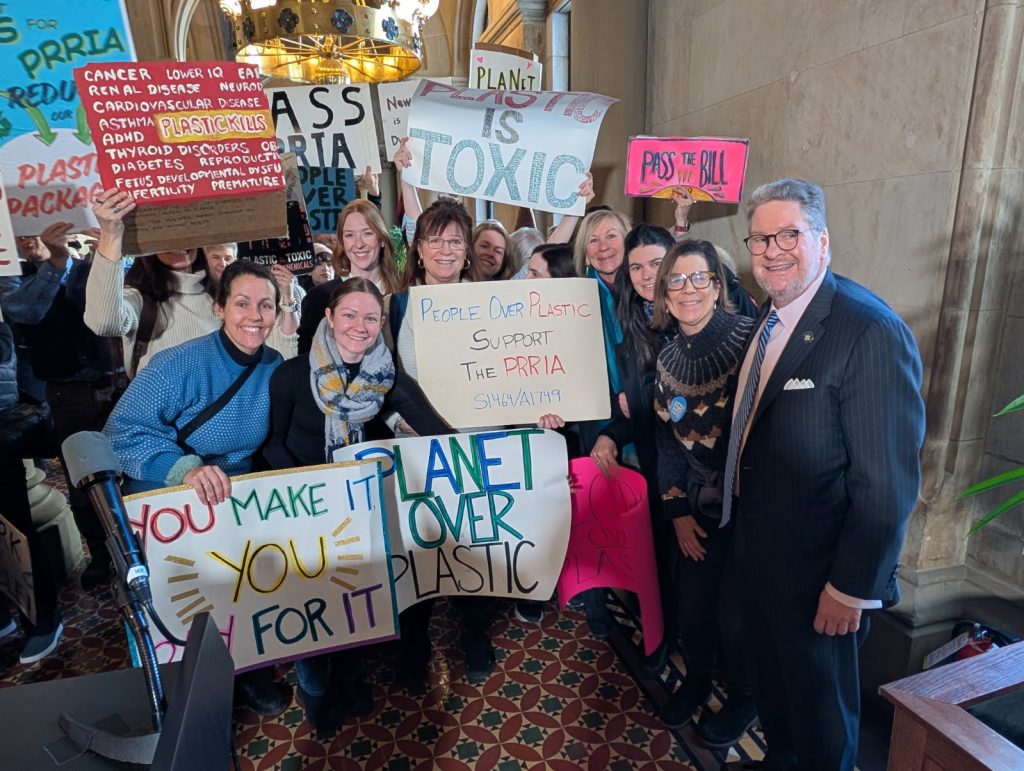
It’s simple: we’ve got to stop plastic pollution. It’s a health, environmental, and affordability crisis. And we have an opportunity to do it by passing PRRIA (the Packaging Reduction and Recycling Infrastructure Act, A1749 / S1464).
This page is the spot to find call scripts, social media sharing kits, and facts about the bill. Reach out to us if you have questions or need any support—we’re in this together.
Action One: Call your Assemblymember
It’s easy, even though phone calls sometimes conjure social anxiety (typically, you’ll leave a message with a staffer or voicemail). We have a super simple script for you to read. And remember, they work for you!
📞 Say: “Hi, I’m a constituent from [TOWN] calling to ask the Assemblymember to co-sponsor the Packaging Reduction and Recycling Infrastructure Act, bill A1749. This bill saves taxpayer money by making companies responsible for their own waste, and it protects our health by banning toxic packaging. With the session ending June 4th, I strongly urge your support.”
We’ve got options! Post what you care about most, because this bill does it all: solving health, environmental, and affordability issues stemming from plastic packaging pollution.
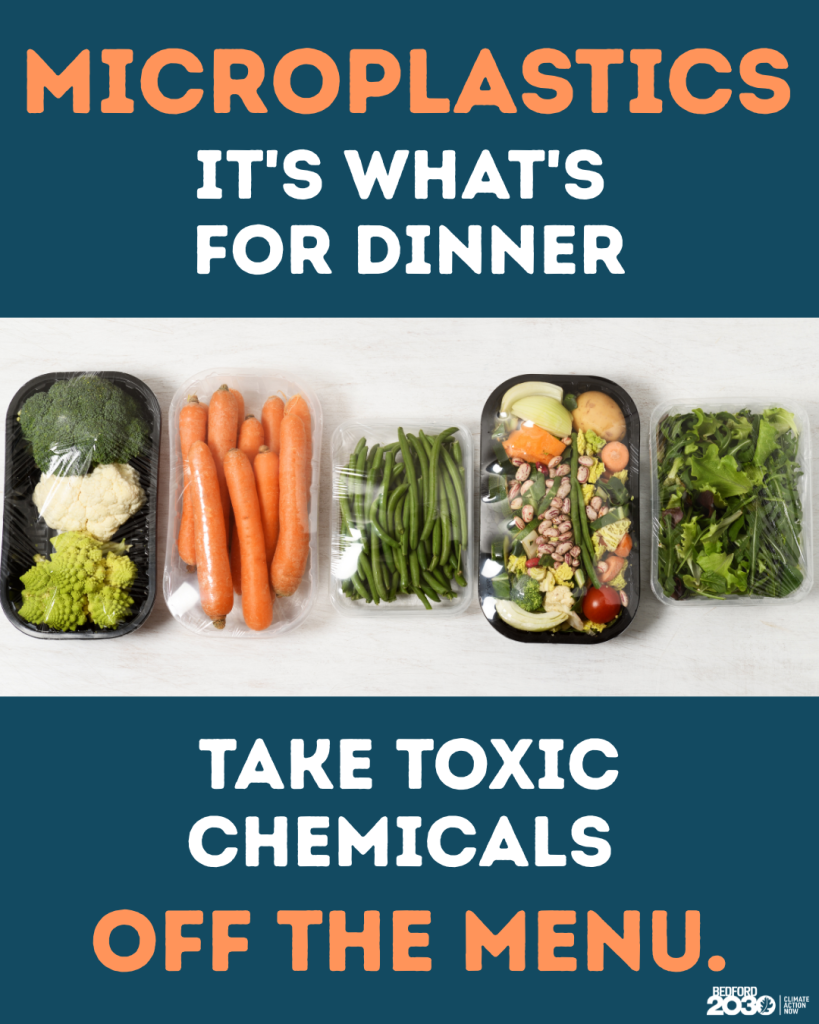
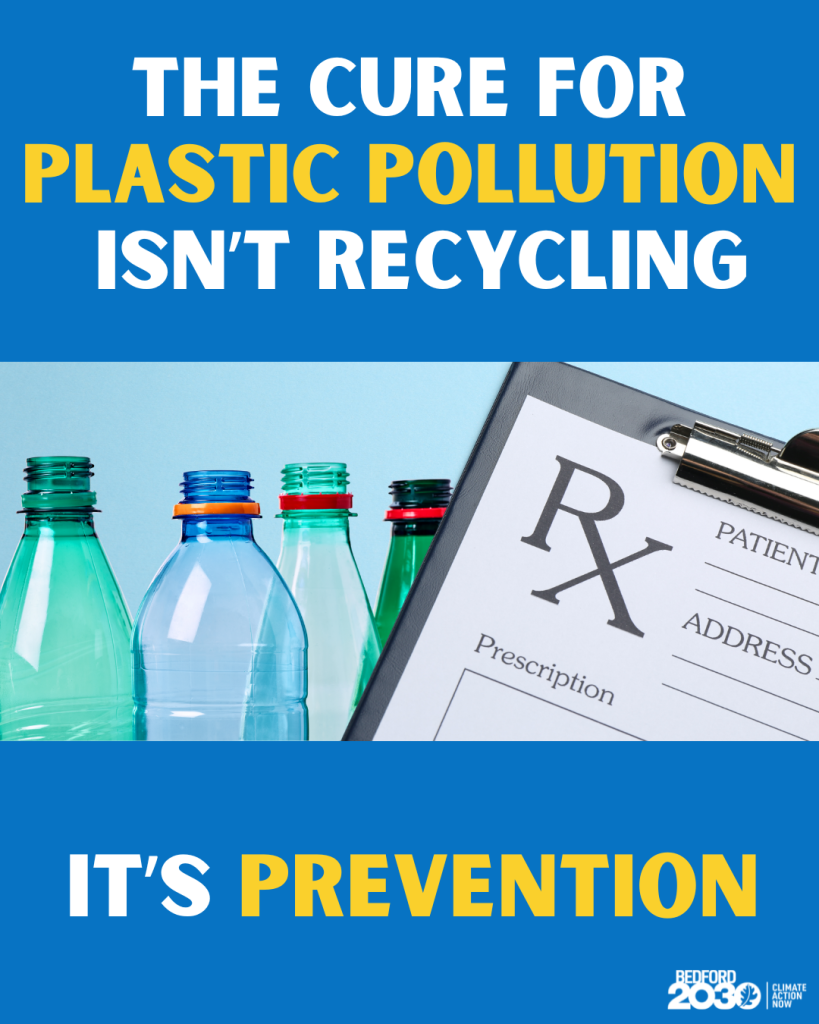
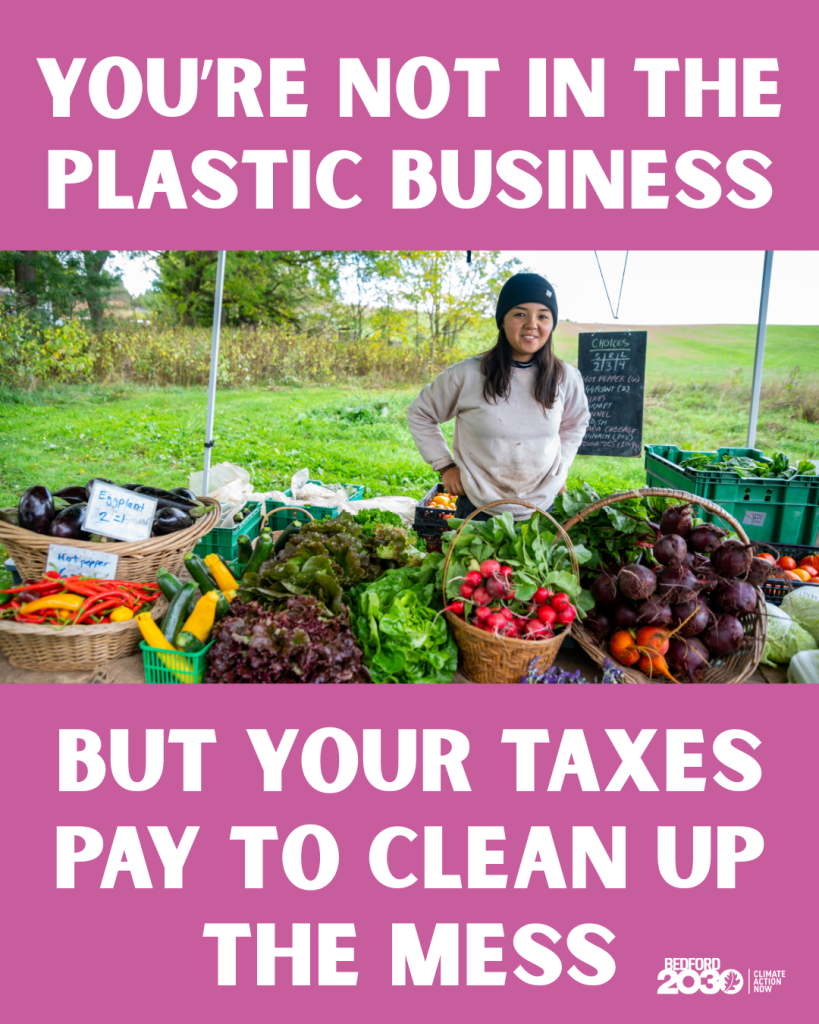
Steal (with our express permission) a graphic. Mix and match, or post by theme. Pick from the three below, and find fact carousels, too. Download and share widely.
The Packaging Reduction and Recycling Infrastructure Act (PRRIA, A1749/ S1464) is a New York State bill currently under consideration by the state legislature that will:
Reduce packaging waste by 30% over 12 years
Ban 13 toxic chemicals in packaging (including PFAS, lead, mercury, PVC)
Make companies that create the waste—not taxpayers—pay for disposal costs. This is called Extended Producer Responsibility.
Require 75% of packaging to be recyclable by 2055
Q: How does PRRIA impact health?
Plastic-related health impacts cost Americans an estimated $1.5 trillion in a single year!
Chemicals in packaging leach into food and drinks, making exposure difficult to avoid
Microplastics have been found in human blood, organs, and even placentas and fetuses
Inside the body, microplastics can cause irritation, inflammation, and cell rupture.
Q: How does PRRIA impact the environment?
Plastic pollution is growing: In 2020, 35.7 million tons of plastic were made in the United States, and plastic production is slated to double in the next 20 years.
Environmental justice: When burned in incinerators or processed in chemical recycling facilities, plastic waste releases toxic chemicals that cause climate change, human health problems, and disproportionately impact environmental justice communities. Cumulatively, this waste accounts for 12% of the state’s greenhouse gas emissions.
Plastic’s role in climate change: Plastic production is warming the planet four times faster than air travel, according to a federal government study released in April 2024.
Ocean plastic pollution: The ocean is swiftly becoming a watery landfill, with negative effects on marine life. Thirty-three billion pounds of plastic enter the ocean each year worldwide, the equivalent of two garbage trucks per minute, primarily from land-based sources.
Incentives for reducing packaging’s environmental impact: Through the use of “eco-modulated” fees, the bill incentivizes companies to redesign their packaging to be reduced, reused, or recycled more effectively.
Q: How does PRRIA Impact Small Businesses/Consumer Costs?
Currently, New York State municipalities cover 100% of waste collection and disposal costs, including hauling, with taxpayer dollars.
With PRRIA, some of these costs would shift to companies, saving taxpayer money! With PRRIA, some of these costs would shift to companies, saving taxpayer money! For example, New York City alone spent almost $2 billion on waste management last year.
Consumer Reports has formally voiced its support for PRRIA because it reduces waste without significantly raising costs.
PRRIA is projected to save New Yorkers $1.3 billion in waste management costs over 10 years!
In a 2024 Siena poll, 82% of New York voters said that single-use plastic packaging is a problem. A bipartisan two-thirds (67%) support the Packaging Reduction and Recycling Infrastructure Act. Highest support was among African-American voters, with 81% in favor.