
How to Contribute Nothing (to Climate Change) with David Pogue
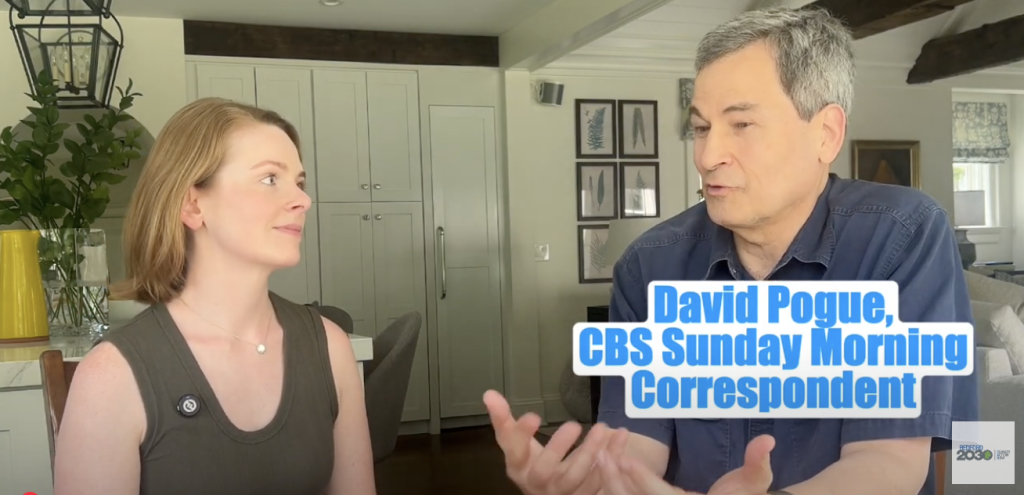
Bedford 2030 sat down with David Pogue—CBS Sunday Morning Correspondent, seven-time Emmy Award winner, tech and science writer, Bedford 2030 board member, and “eco-dude”—to talk about his experience ‘going solar’ at his home in Bedford, NY.
On his number one reason for getting his panels, David says, “I would like to have a zero footprint. I would like to contribute nothing to the climate crisis. This is a relatively quick, easy fix for the damage that I do to the planet.”
Free Energy—Forever
Switching to solar isn’t just about the planet—it’s also smart economics. Plus, the Federal* and New York State governments offer major tax incentives to help customers pay for solar and lock in savings, both energy and financial.
| “Turns out, being a zero footprint guy is massively lucrative.”—David Pogue
David’s solar quote started at $58,000. “But then, New York State stepped in and said, ‘Oh, we have these programs to help offset the cost. Can we pay you $10,000?’ We thought it over. And we said okay. So now we’re down to $48,000. And then the federal government* said, ‘Do you mind if we pay for a third of it?’ And so our total cost was $33,000. About half of the original price.”
Yes, $33,000 is still a big chunk of change, but here’s the payoff: David will see a full return on his investment in just over 8 years.
“We were paying $4,000 a year for electricity. So if you do the math, in a little over eight years, we will have paid off those panels completely. And then it’s free electricity forever.”
🚩 *The 30% Federal Tax Credit on solar will disappear at the end of this year. If you’re even thinking about solar, now is the time to act. More on this below. 🚩
Pull an Uno Reverse on your Energy Bills
Take a peek at David’s energy bills, and you’ll see something weird—his bills are in the negatives.
“If you generate more power than you’re using, they [your utility] will record how much extra. They take your excess and they use it to feed to other customers who don’t have solar. So in effect, my excess is powering homes nearby that would have used coal and oil. That’s a great feeling.”
David’s energy bill in January 2025 was $800/month. When he installed his solar in February, his bill dropped to -$400. This is thanks to net metering: NYSEG tracks David’s surplus and gives him credit. That -$400 is “banked” energy that powers his home later, like at night or in winter.
David Debunks Common Solar Misconceptions
- Do solar panels reduce my home’s value?
- No. Solar panels can increase your home’s value by more than 10% (Solar Reviews).
- “If we ever do move out,” David says, “we’re going to get a big chunk of change back from our installation.”
- Aren’t they kind of bulky and aesthetically displeasing?
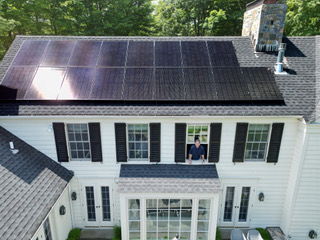
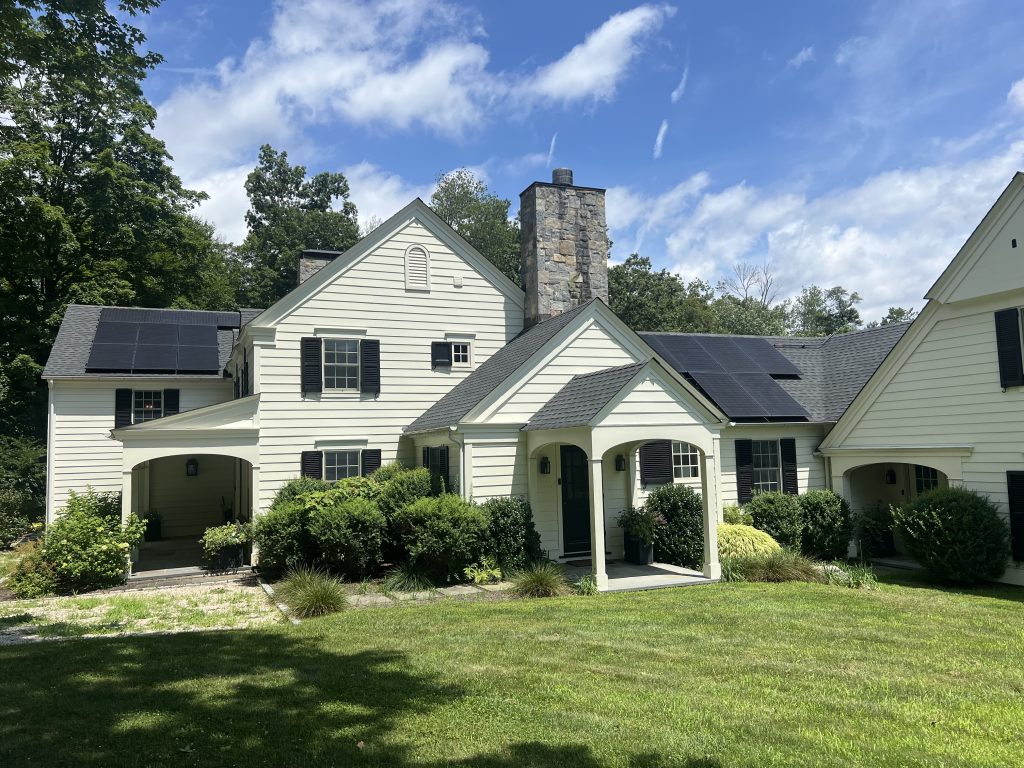
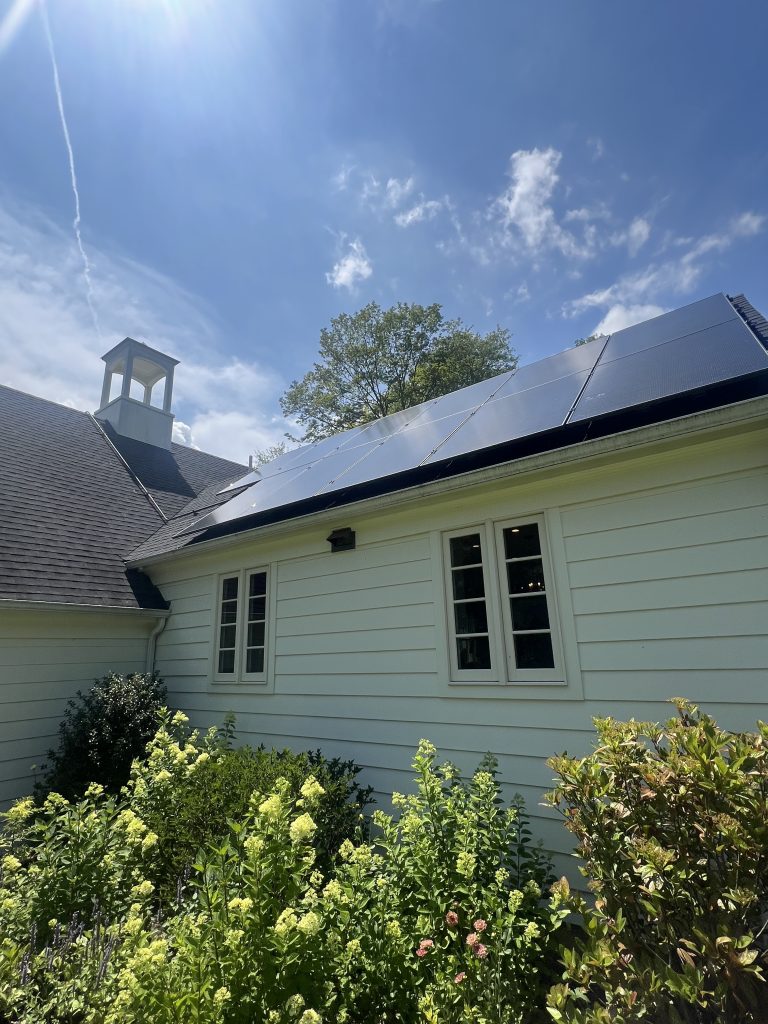
- “They’re no longer that grid of silver wires on black,” David says. “Now they’re shiny, flat, glossy black, like an Apple ‘iPanel.’ I think they look beautiful. We stopped noticing them after about three days altogether.”
- Aren’t solar panels inefficient?
- “When these things started out in the 70s, they were [converting] like 2% [of the sun’s energy]. Now we’re up to 22%.”
- Still seems low? Actually, a 22% conversion rate of solar energy to electricity is more than enough.
- “[Our panels] will generate 102% of the power that my house and my two electric cars consume…and have enough to give back to the electric company to distribute to other homeowners. It’s impressive stuff.”
- What happens if it snows and covers my panels? Will I have no power?
The black panels attract heat, melting the snow right off.
What happens if there’s a power failure and the grid goes down?
In those rare instances of superstorms or Nor’Easters, “that’s why it’s good to have a generator or battery,” David says.
- What if I can’t get enough panels to power my whole house?
- “That’s why you’re still connected to the grid. Your energy bills don’t have to be zero. But if you can cut down by 80%, that’s also good.”
- Isn’t all the paperwork a nightmare?
- “That’s the beauty of these modern solar installers…About every three weeks, somebody would call us and say ‘We just want to let you know, the paperwork is at the Town of Bedford.’ They did all the permits, all the paperwork. I did nothing.”
What if I can’t afford to buy panels outright?
Leasing panels means no upfront cost—you just pay a fixed, lower rate for electricity, meaning you’ll lock in predictable, lower bills for years to come.
- “[Leasees] are offered a fixed forever lower rate for their electricity that they pay back to the solar company, which is still good because the New York State Legislature has just approved ConEd and NYSEG to raise their rates 14% a year.”
David's Solar Journey
David’s solar contractor is Infinity Energy (not sponsored by Bedford 2030). They made the process easy and hassle-free.
“They gave us a coach, a single point of contact, and he met with us over Zoom a couple of times, showed us maps of how things would go, and explained how the money would work. Super helpful all the way through, very low pressure. [Infinity] said, ‘If you choose to proceed, we’ll send out somebody to look at your roof and tell you what the numbers are.’ And the numbers were amazing.”
His system came with a 25-year warranty, which covers the average lifespan of a solar panel.
“I mean, I will be 89 or something [when the warranty is up.] Anything goes wrong? It’s a free fix. So yeah, it’s been a great experience.”
Finding a trustworthy solar installer is critical. Our advice? Sign up for Sustainable Westchester’s free Solarize program. You’ll be matched with your very own solar consultant who can guide you through the entire process. They’ll help you assess if solar is right for you and suggest vetted contractors. This service is FREE, so sign up today to take advantage of solar deals while they last.
P.S. Anytime someone goes through Infinity Energy based on David’s referral, he’s paid a finder’s fee that he donates back to Bedford 2030. “Every time somebody signs up to get solar, you’re not only helping yourself, but you’re helping the planet in a secondary way.” Feel free to name-drop David Pogue as your reference if you use them!
The Time for Solar is Now
H.R. 1 (AKA the “Big, Beautiful Bill”) slashed climate incentives and green energy rebates across the board. That includes the Federal Government’s 30% rebate on residential solar, which ends December 31st, 2025.
Take it from David: “Yes, the Presidential administration and Congress have decided to end these incentives at the end of 2025. So if you are anywhere close to being on the fence, now is the time to get going. I mean, they’re paying for it.”
Taking the solar plunge can be daunting, but for David, it was 100% worthwhile.
“The largest thing is just inertia. It’s just, you know, ‘oh, it’s a whole big thing.’ There’s got to be self-interest at heart. Fortunately, electric cars and solar panels are so greedy. Like, you could hate the planet. You could just be disgusted with all this stuff and still say, ‘well, wow, my electric car goes four times faster than your gas car, has 1/100th as many moving parts, needs no oil changes, no filter changes, no maintenance at all,’ right? And you could say, ‘I hate the planet, but I do enjoy paying ConEd nothing.’”
And when you add the environmental and health benefits (no fossil fuels in your home = healthier indoor air) on top, solar becomes even more compelling.
Government rebates won’t last. Here are two ways to take advantage and start saving today:
- Sign up for Sustainable Westchester’s Solarize program. Get a personalized solar assessment, speak with a solar expert, and connect with vetted contractors. The biggest plus? The whole program is entirely free. Learn more here.
- Need more general home energy efficiency advice? Bedford 2030’s Energy Coach will meet with you on Zoom to give you personalized advice on how you can save money and energy. Explore heat pumps, air sealing and insulation, electric cars, government rebates, and more. And guess what? It’s also free. Learn more here.